In this guide
- Why does my car smell like burning rubber?
- The usual suspects
- The harmless culprit nobody expects
- Burning rubber vs other burning smells: what the difference means
- Burning smell but the gauge isn't rising: what gives?
- Timing matters: after driving vs parked vs going uphill
- Is it safe to drive?
- Why does the smell keep coming back?
- When the smell is actually inside the cabin
- Preventing the smell in the first place
A burning rubber smell in your car cabin is genuinely alarming.
You slide behind the wheel, or you're halfway through a drive, and there it is—sharp, hot, that acrid tire-like stench.
It's unsettling for good reason. Friction, heat, and kinetic energy are all normal inside a running vehicle. Burning is not, as AAA puts it.
This guide walks through what that smell usually means. The most common culprits. How to tell them apart. And when you need to pull over right now.
We'll keep it practical. By the end, you should know whether you're dealing with a five-minute fix or a tow truck situation.
Why does my car smell like burning rubber?
Most burning rubber smells point to something under the hood, not your tires.
Screeching tires seem like the obvious culprit—they're not, notes Paul's Auto Repair.
The smell almost always traces back to rubber or fluid meeting a hot surface.
Toyota of Orlando describes it simply: the odor usually means exactly what it smells like. Something rubber under the hood is burning or melting. Usually that's a loose hose or a slipping belt touching something hot, according to.
So the real question isn't "is this serious." A burning smell is an immediate warning sign and can escalate into a serious repair if ignored, warns.
The real question is which part is doing it. Let's narrow it down.
The usual suspects
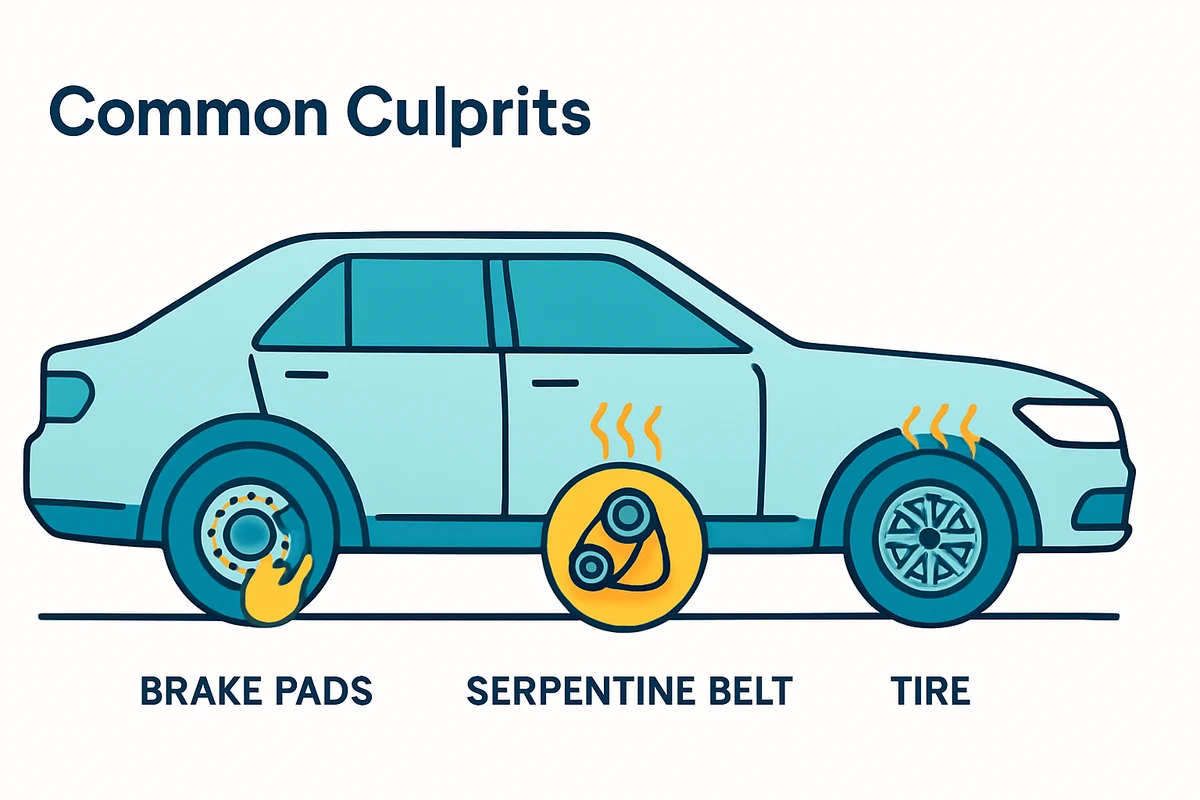
Several systems can throw off that hot-rubber odor. The trick is pairing the smell with other symptoms you're noticing.
Here are the most common culprits, roughly in order of frequency.
1. A slipping or worn drive belt
This is one of the top causes.
Rubber belts in your engine bay transfer energy from the running engine to accessories. Over time they naturally wear out and lose their grip, explains.
As a belt stretches and gets loose, it can touch other hot engine parts. Or it can burn from increased friction as it slips.
Heavy-duty rubber belts can slip out of their tracks and rub against other parts, generating both heat and that rubber-burning smell, adds.
Listen for a chirp or squeal. A slipping belt usually complains loudly before it fails.
Wisco Automotive notes the noise gets loudest when the AC is on or during cold starts. Keep ignoring it and the belt can overheat, glaze over, and snap completely.
Don't brush this off. Driving on worn belts can lead to expensive, catastrophic engine damage, cautions.
2. A loose or failing rubber hose
Check the hoses next.
Under the hood, rubber hoses carrying coolant, power steering fluid, and other liquids can come loose and touch hot engine parts. That contact leads to melting or burning and the distinctive smell, says.
Hoses also become brittle over time. Like belts, they wear, crack, and can leak.
Because rubber hoses in your vehicle carry various fluids, a leak dripping onto the exhaust causes burning smells in the cabin, explains.
A melted hose isn't just a smell problem. It can lead to leaks and overheating that damage your engine, warns.
3. Dragging brakes or a stuck caliper
Your brakes are a strong suspect, especially if the smell shows up right after braking.
A hot rubber smell can mean a brake is dragging—often from a seized caliper—according to StarTech Prestige.
There's a simple tell. If one wheel is noticeably hot or the car pulls to one side when you brake, suspect a dragging brake, the same source advises.
Your brake system dissipates the heat generated by pads gripping fast-moving rotors. Leaking fluid, stuck calipers, heavy braking, or worn pads can all produce a noticeable burning smell, notes.
RAC puts brakes and tires at the top of its list for a rubber burning smell. You may also hear squeaking brakes at the same time.
Some guides treat brake odor slightly differently.calls the overheating-brake smell more of a "burning carpet" odor that intensifies when you hit the brakes. Either way, the fix is identical—get the brakes checked soon.
4. Burning engine oil
Oil leaks create a hot, acrid smell.
Motor oil dropping onto hot exhaust components or heated metal burns away, explains.
To your nose, it reads as burnt rubber. Burning oil spilling over hot engine surfaces creates an unpleasant burnt-rubber smell, confirms.
Common leak spots: valve cover gaskets, oil filter housing seals, or spills from an oil change, according to.
Look for the evidence. Strange puddles under your car or a low oil level on the dipstick are the giveaways, notes.
Don't let this slide. An oil leak can quickly lead to overheating and engine damage, and leaking oil can even cause a fire under the hood, warns.
5. Leaking coolant, power steering, or transmission fluid
Oil isn't the only fluid that smells when it burns.
Leaks from power steering or transmission fluid onto hot parts emit a burning rubber smell, says.
Coolant leaking onto hot engine surfaces creates a burnt-rubber smell too, the same source notes. Check under the car for puddles and inspect the radiator and hoses.
The pattern is consistent: any fluid landing on something hot can mimic burning rubber.
6. An overheating or slipping clutch
Manual transmission? Add the clutch to your suspect list.
An overheating clutch, usually from riding the pedal or excessive wear, produces a burning rubber smell when you shift gears, explains.
A burning clutch smell tends to show up when the clutch slips under load—towing, climbing hills, or resting your foot on the pedal, adds.
If the smell comes with difficulty shifting, get the clutch inspected. It may need adjustment or replacement.
7. Electrical faults
An electrical problem can smell like burning rubber mixed with melting plastic.
Short circuits or overheating electrical components in the engine produce a burning rubber and plastic smell, notes.
Electrical shorts bring other symptoms too. Flickering lights, malfunctioning accessories, or even a dead battery can accompany the odor, says.
Treat a sharp electrical smell seriously. It's one of the more urgent causes on this list.
8. Tires and debris
Sometimes it really is the rubber you're rolling on—or something stuck to the car.
Spinning tires under stress can produce a burning smell, though this is less common, notes. Check your tire pressure and tread.
A tire rubbing on a broken splash shield or fender liner inside the wheel well is another cause worth checking, adds.
Foreign objects in the engine bay can burn too. Debris lodged against hot parts releases a rubber smell, so keep the bay clean, advises.
The harmless culprit nobody expects
Before you panic, check for the simplest explanation.
A plastic bag stuck on the exhaust pipe heats up and melts, making a sharp burning smell that lingers, explains.
It tricks a lot of drivers. The fix costs nothing.
Wait until your car is fully cooled, then look underneath. If a melted bag is all there is, you can drive off with peace of mind.
Burning rubber vs other burning smells: what the difference means
Not all burning smells mean the same thing. Matching the scent to the cause saves time and money.
breaks it into four types.
Burning rubber usually means something rubber under the hood—a loose hose or a slipping belt touching something hot.
Burning carpet oddly points to the brakes. You'll notice it especially when the smell intensifies as you brake, often from thin pads or sticking calipers.
Burning plastic can signal a wiring issue. The insulation around wires is often soy-based plastic, which rodents love to chew, leaving exposed wires that can spark, warns.
Burning oil means a shop visit as soon as possible. It usually means an oil leak that can lead to overheating and engine damage.
One more distinction worth knowing. If you smell rotten eggs or sulfur rather than hot rubber, that's a different problem entirely. The sources above tie the hot-rubber odor specifically to belts, hoses, brakes, and leaking fluids, not to that egg-like smell. When in doubt, describe the exact scent to your mechanic.
Burning smell but the gauge isn't rising: what gives?
This is one of the most common worries—and it's a fair one.
A burning smell without a rising temperature gauge doesn't mean everything is fine. The odor and overheating are two separate signals.
Most of the causes above happen well before the engine ever overheats. A slipping belt, a dragging brake, an oil drip on the exhaust, or a plastic bag on the exhaust pipe will all smell long before your temperature warning light comes on.
frames it well: a burning odor is your vehicle telling you something needs attention. Sometimes it's minor—residue on the exhaust. Sometimes it's a leak, worn brakes, a slipping belt, or an electrical issue.
So a normal temperature reading is reassuring, but it's not the all-clear. Use the smell itself as the warning.
Timing matters: after driving vs parked vs going uphill
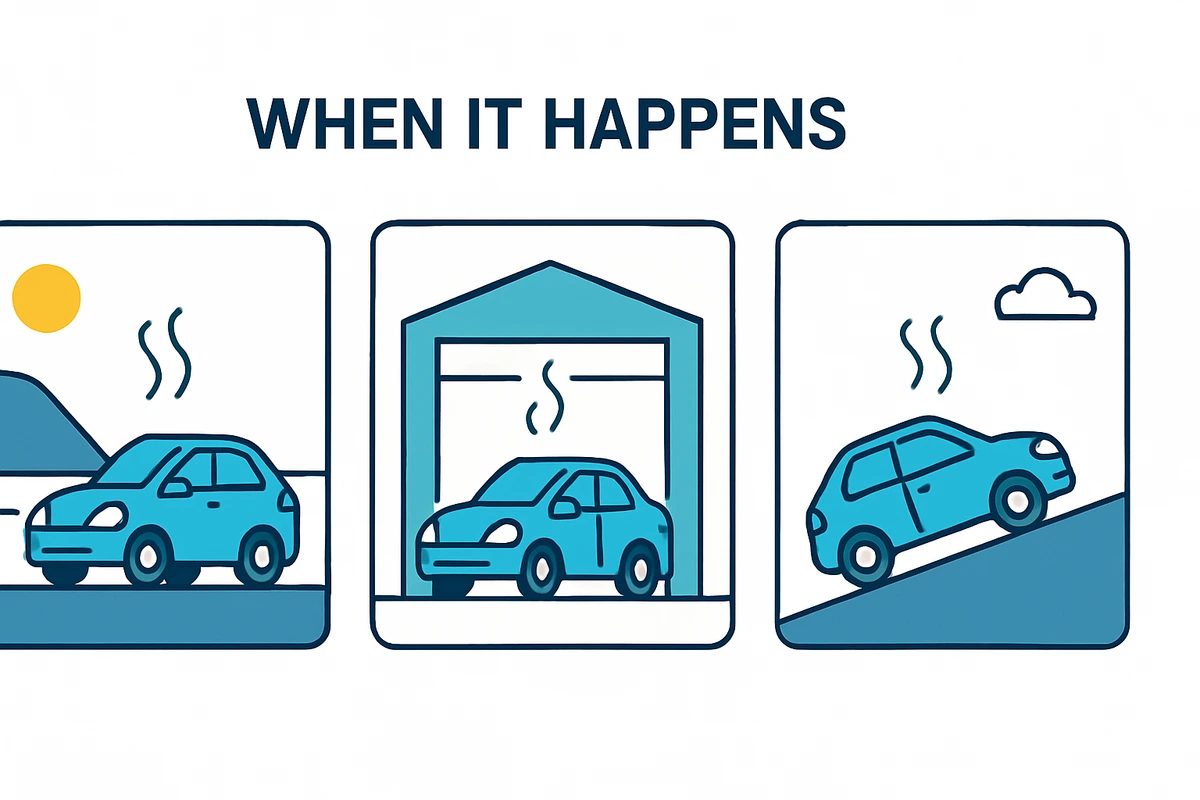
When you notice the smell tells you something.
If you notice it mostly after driving and see light smoke from the engine area once you park, oil may be leaking onto the exhaust, according to.
That lingering smell hours after you switch off often traces to fluid slowly cooking on a hot surface. Your engine bay holds heat long after the engine stops.
If the smell appears after descending a hill and reads as a hot, chemical odor, overheating brakes may be your culprit, notes. You might also feel brake fade or a soft pedal.
If it shows up when towing, climbing, or accelerating hard, a slipping clutch or belt under load is the likely source, per the same guide.
If it's loudest on a cold start or with the AC running, look again at the belt, which slips most when it's cold or under accessory load, adds.
Pay attention to when the smell peaks. It often points straight at the cause.
Is it safe to drive?
Short answer: sometimes, but don't assume.
A burning smell with smoke needs immediate attention, warns. If there's smoke or a hot wheel, stop and investigate. A dragging brake or belt can escalate quickly.
Otherwise, get it checked promptly rather than ignoring it, the same source advises.
lays out sensible safety steps if you smell burning:
- Stay calm and look for warning lights. If the check-engine, battery, or temperature light is on, be extra careful.
- Pull over safely. Turn off the air conditioning and set the parking brake.
- Look for smoke. Light wisps under the hood may be oil or coolant on hot parts, but thick smoke, sparks, or a strong electrical odor means stop driving and call for help.
- Do a quick walk-around for fluid drips, a plastic bag on the exhaust, or a tire rubbing on a liner.
- Don't open the radiator cap. Hot coolant can spray and burn skin—let the car cool first.
The theme across every source is identical: address it quickly. Ignoring a burning smell can turn a small repair into an expensive one, and in the worst cases into a fire.
In summer, an engine bay already runs close to its limits. Any extra heat source—a dragging brake, a slipping belt, an oil drip—has less margin before it becomes critical. When the ambient temperature is merciless, treat a burning smell with a little more urgency.
A useful rule: if the smell is faint, the car behaves normally, and you see no smoke, it's reasonable to drive gently to a workshop. If the smell is strong, growing, or paired with smoke, a hot wheel, or a warning light, stop and call for help.
How to diagnose this yourself, step by step
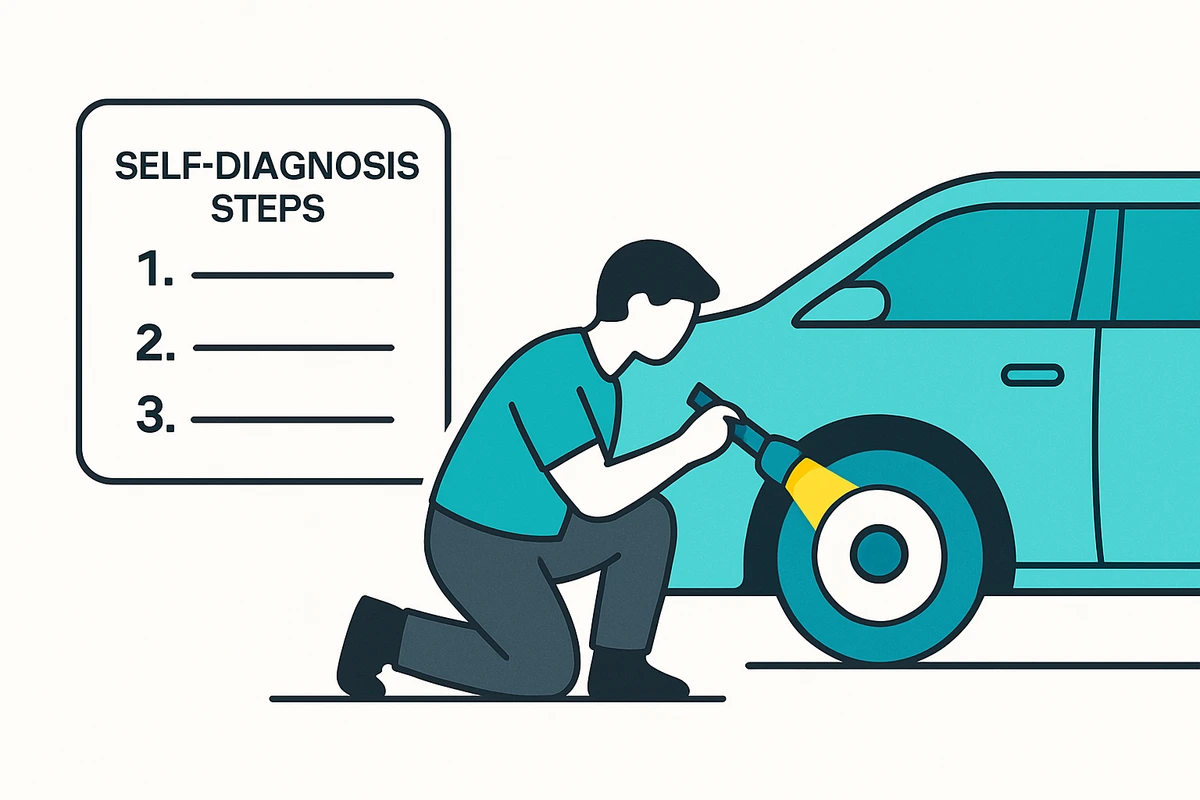
You don't need to be a mechanic to narrow this down. Just pair the smell with the symptoms.
-
1
Let it cool
Never inspect a hot engine bay or open a hot radiator. Wait until everything is cool to the touch.
-
2
Walk around the car
Look under it for fresh puddles. Different fluids point to different causes—oil, coolant, power steering, and transmission fluid can all burn on hot parts, asexplains.
-
3
Feel the wheels (carefully)
If one wheel is much hotter than the others, that points to a sticking caliper or parking brake, notes.
-
4
Check the belts and hoses
Look for a belt that is glazed, cracked, or out of its track. Check for hoses resting against something hot. A squeal on start-up supports a belt problem.
-
5
Check your oil level
Pull the dipstick. A low level plus a burnt smell suggests a leak dripping onto the exhaust, per.
-
6
Look and listen for electrical signs
Flickering lights or dead accessories alongside the smell point to an electrical fault, asdescribes.
The value of this method is that it stops you throwing parts at the problem. A good shop uses the same logic—a methodical check to pinpoint the real cause rather than guessing, asputs it.
Why does the smell keep coming back?
A burning smell that returns after you thought you fixed it usually means the root cause was never solved.
If a belt was only tightened but is already glazed, it will slip again. If a caliper was freed but is on its way out, it will seize again. If an oil leak was cleaned but not sealed, the drip returns.
That's why identifying the true source matters more than masking the symptom. Because the same symptom can have several causes, a proper diagnosis targets the real one, notes.
A recurring smell is your cue to stop patching and get a full inspection.
When the smell is actually inside the cabin
Not every burning or bad smell comes from the engine. Some live inside your car's interior and air-conditioning system.
A smelly car AC can signal fluid leaks in the unit, electrical faults, or a buildup of mold and bacteria that gets circulated around the cabin when you switch it on, explains.
Modern vehicles carry a lot of electronics, and when those systems fault they emit bad smells that get pumped through the vents, the same source adds. On rare occasions an animal infestation is even to blame.
It's also worth ruling out a smell that isn't "burning" at all, just chemical.
A brand-new interior gives off what many call the "new car smell." It's really off-gassing—the plastics, leather, fabrics, and adhesives settling into place, explains.
Those fumes include volatile organic compounds, or VOCs. They're not immediately harmful, but continued exposure can cause minor health concerns, notes.
A strong chemical smell that fades over weeks is usually off-gassing, not a fault. A sharp, hot, rubber-like smell that appears suddenly belongs to the mechanical list above.
This is where regional conditions in Kuwait matter, in my experience.
Extreme summer heat is hard on rubber. Belts, hoses, and seals age faster when they bake day after day. It's wise to inspect them more often here than a mild-climate guide would suggest.
Heat also stresses the cabin. Upholstery, plastics, and adhesives can off-gas more strongly when a parked car sits in direct sun. Trapped moisture from heavy AC use encourages the mold and bacteria thatdescribes.
Fine desert dust adds to it. Dust settling into vents and upholstery holds odors and can make a musty or acrid smell worse over time.
None of this replaces a mechanical check. But if you've ruled out the engine and the smell is coming from the vents or the seats, the problem is likely an interior and air-conditioning issue rather than a failing part.
Preventing the smell in the first place
Prevention comes down to catching wear before it turns into heat and smoke.
Prevention checklist
- Inspect belts and hoses regularly for cracks, glazing, or looseness—they're the two most common sources, perand.
- Keep an eye on fluid levels and look under your car for leaks, so a small drip never reaches the exhaust.
- Stay on top of tire pressure, tread, and brake pads, whichflags as key checks for a rubber burning smell.
- Keep the engine bay clean and clear of debris that can burn against hot parts, asadvises.
- Service your air conditioning and clean the cabin to stop mold and bacteria building up in the vents.
In a hot, dusty climate, doing these checks a little more often just makes sense.
Frequently asked questions
Does a serpentine belt smell like burning rubber?
Yes. The rubber belts in your engine bay wear and lose elasticity over time, and a slipping or stretched belt touching a hot component is a leading source of the smell, per. A squeal on cold start or with the AC on supports a belt cause, adds.
Does the transmission smell like burning rubber?
It can when its fluid leaks. Transmission fluid landing on hot parts emits a burning rubber smell, notes. On a manual car, a slipping clutch under load also produces a burning smell when changing gears, per the same source.
What car fluid smells like burnt rubber?
Several: engine oil, power steering fluid, transmission fluid, and coolant all create a burnt-rubber smell when they leak onto hot engine surfaces, according to. Checking under your car for the color and location of any puddle helps narrow down which one.
How do I fix a burning rubber smell from my car?
You fix the cause, not the smell. That means securing or replacing a loose hose or worn belt, freeing a sticking brake caliper, or sealing a fluid leak, as the causes above describe. Because one symptom can have several causes, a methodical diagnosis pinpoints the real one rather than guessing, notes. If the trail leads to the vents or upholstery instead, the fix is an interior and AC clean, not a mechanical repair.
Why do I keep smelling burning rubber even after a repair?
Usually because the root cause was masked rather than solved—a glazed belt, a failing caliper, or an unsealed leak will return. A recurring smell is a signal to get a full inspection instead of another quick patch.
The bottom line
A burning rubber smell in your car cabin is a signal, not background noise to ignore. Most of the time it's a belt, a hose, the brakes, or a fluid leak meeting a hot surface. Sometimes it's as harmless as a plastic bag on the exhaust. Occasionally it's electrical and urgent.
Match the smell to the symptoms, act on smoke or a hot wheel immediately, and never let a recurring odor go unchecked. The good news? A clear head and a simple walk-around solve most of these cases. Let the car cool, look for the obvious culprits first, and only then decide whether it's a quick fix or a workshop job.
If the trail leads back to your cabin, vents, or upholstery rather than the engine, that's where a proper interior clean makes the difference. Posefore Wash & Polish offers an Interior Deep Clean service—steam cleaning, upholstery care, AC vent treatment, and odor sanitization—to clear lingering smells and keep your cabin fresh in Kuwait's heat and dust. Book it once you've ruled out a mechanical cause, and enjoy a car that both drives and smells the way it should.