In this guide
- First: How Worried Should You Be?
- A Quick Look at Your Fuel System
- Causes When There IS a Leak
- Why Your Car Smells Like Gas When Starting
- Why Your Car Smells Like Gas When the AC or Heat Is On
- Parked, Driving, or Accelerating: Why Timing Matters
- Are You Sure It's Actually Gasoline?
- Gas Smell but No Check Engine Light?
- What to Do Right Now: A Safe, Step-by-Step Check
- A Note for Drivers in Kuwait
- How to Clear the Lingering Gas Smell From Your Cabin
- When to Call in the Professionals
You open the door. Slide in. That sharp whiff hits immediately.
So why does your car smell like gas? It's one of the most common questions drivers ask. The honest answer is that it can range from completely harmless to genuinely dangerous.
Sometimes it's just lingering fumes from your last fill-up. Other times it points to a fuel leak or an emissions fault that needs immediate attention.
This guide walks you through every likely cause, when the smell appears, and what you can safely check yourself. We'll also cover something most articles skip: how to actually remove the odor once it's soaked into your cabin.
First: How Worried Should You Be?
Not every gas smell is an emergency. But you should never ignore one.
Gasoline contains volatile organic compounds (VOCs) that evaporate easily, especially in warm conditions, according to Burt Brothers Tire & Service. When you can smell fuel, you're breathing those vapors.
Two real risks here. Your health. And fire.
Breathing petrol fumes causes dizziness, headaches, and respiratory issues, notes The AA. Long-term exposure can bring on headaches, dizziness, respiratory problems, and more serious long-term effects,adds.
Fire is just as serious. Petrol fumes are highly flammable and pose a significant fire hazard, warns.
Fuel that sprays onto your engine or exhaust can ignite fast. Fuel vapors trapped in a garage can become extremely volatile, according to Firestone Complete Auto Care.
Simple rule of thumb: A faint scent right after refueling? Usually nothing. A strong or persistent smell? Warning sign.
A persistent smell can signal a leak, a malfunctioning fuel system component, or another issue that needs attention, explains The Auto Doc.
If the smell is strong while the engine runs, treat it as serious and get a mechanic involved,advises.
A Quick Look at Your Fuel System
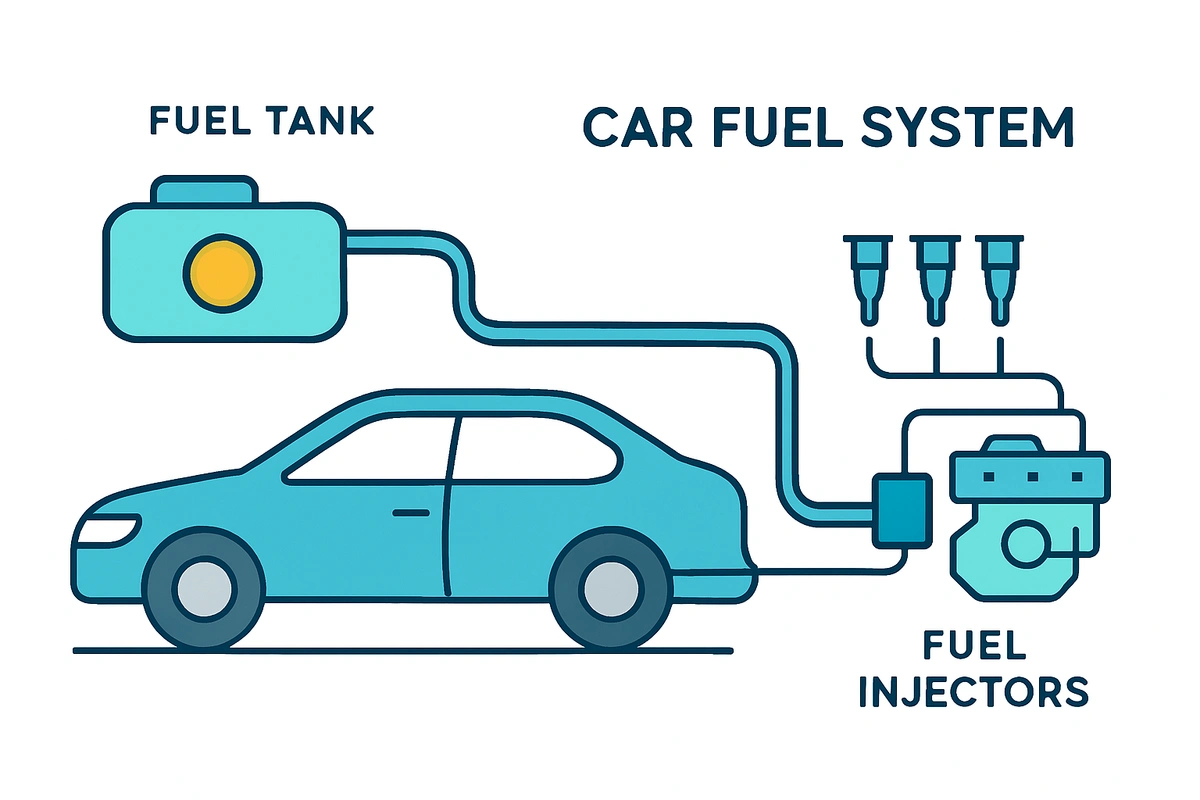
You don't need to be a mechanic to understand the basics. Knowing the path fuel takes makes every cause below easier to picture.
breaks the journey into a few main parts:
- Gas tank. Stores fuel at the rear of the vehicle until it's needed.
- Fuel pump. Usually an electric pump inside the tank. Draws fuel out and pressurizes the system when you start the engine.
- Fuel filter. Removes dirt, debris, and contaminants.
- Fuel lines and hoses. Carry fuel from the back of the car to the front through metal lines and rubber hoses.
- Fuel rail. Distributes fuel to the injectors.
- Fuel injectors. Deliver a precise amount of fuel into each cylinder, where it mixes with air and ignites.
The important takeaway: The whole system is designed to be completely sealed. You should never smell raw gasoline inside the cabin,points out.
So if you can smell fuel, something is letting vapor escape. The rest of this guide is about finding out what.
Causes When Your Car Smells Like Gas but Isn't Leaking
Most common scenario. Most confusing too. No puddle on the ground, yet the smell is there.
Good news: Sometimes the fix is simple,notes. Let's work through the usual suspects.
A Lingering Smell From Your Last Fill-Up
Gas fumes sneak into your cabin while you're at the pump. You might have spilled a little on your hands, clothes, or seats, explains Kearny Mesa Kia. The odor should dissipate before long. Even a tiny drop of gasoline creates a noticeable smell,adds.
A Loose or Damaged Gas Cap
When it's loose, cracked, missing its rubber gasket, or improperly sealed, fuel vapors escape and seep into the cabin, according to. The cap prevents fuel evaporation and maintains ideal pressure inside the gas tank. A faulty one can even affect your emission systems, notes Gillman Acura.
Overfilling or "Topping Off" the Tank
Squeezing in a little more fuel after the pump clicks feels harmless. It's not always. Topping off can lead to spilled fuel that saturates the ground or the charcoal canister, and that lingering smell may just be your last fill-up sticking around longer than it should,explains. The fix is a habit, not a repair: stop filling when the pump clicks off.
Fuel Injector Issues
If a fuel injector becomes partially clogged or stuck open, it creates a rich fuel mixture. Vehicles running rich produce fuel-saturated exhaust fumes that permeate the cabin, according to. Injectors can also develop small leaks over time due to wear, corrosion, or worn seals — excess fuel escapes and hurts your fuel economy,notes.
The Evaporative Emissions System (EVAP)
Modern vehicles have an EVAP system designed to capture and store fuel vapors so they don't enter the atmosphere. If it develops a leak or malfunction, you'll smell gasoline in or around your vehicle,explains. The charcoal canister, purge valve, or vent hoses — if damaged or clogged — can let fumes seep into the cabin,adds. An EVAP problem generally triggers your check engine light.
A Failing Fuel Pressure Regulator
The fuel pressure regulator keeps the fuel system at the right pressure. If it malfunctions, the air-fuel mixture suffers — fuel becomes too thick or too thin, the engine burns through it too quickly, and more fumes escape from the exhaust and work through the ventilation system, explains. You'll notice a noticeable odor plus lower performance and reduced mileage,adds.
Causes When There IS a Leak
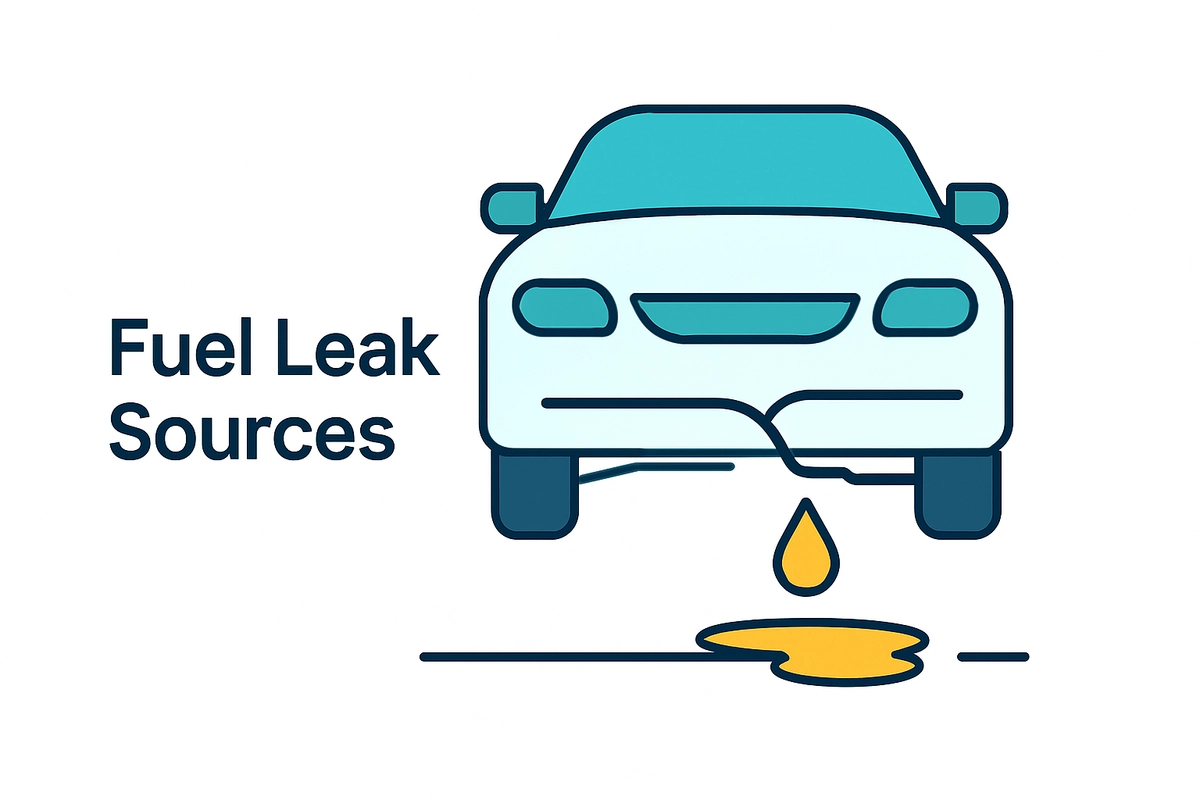
Fuel system leaks are incredibly dangerous. Over time any part of the system can develop leaks from corrosion or physical damage, especially the fuel lines and hoses, according to. The tricky part: leaks don't always leave a puddle. Even the smallest leak in your fuel lines, tank, or injectors can release vapor without dripping — you'll smell it before you ever see it,warns. If you see liquid fuel or wet spots under the car, stop driving and have it inspected immediately,advises.
Now the more serious side. A genuine fuel leak is one of the most common and most dangerous reasons a car smells of fuel.
So how do you spot one? Look and smell for warning signs.
- A strong gas smell near the rear of the car or under the hood,notes.
- Puddles of gas under the car, or dark spots and wet areas beneath it, according toand.
- Decreased fuel efficiency or visible stains on the driveway,adds.
The leak can hide where you can't easily reach. The fuel pump sits inside the tank and belongs with a qualified mechanic. Leaks often occur where fuel pipes connect or at the filter,explains.
Two fuel pipes exist. A supply pipe under pressure and a return pipe. Both can leak, the same source notes.
Because petrol evaporates quickly, a leak is hard to catch. You might need to turn on the ignition so the fuel pump primes and pressurizes the system before an inspection,explains. If you find any leak, don't start or drive the car.
Why Your Car Smells Like Gas When Starting
A smell that shows up when you turn the key is one of the most searched versions of this problem. Often, it's less alarming than it feels.
During cold starts, engines don't burn fuel efficiently, especially if the air-fuel mixture runs too rich. Excess fuel creates a temporary smell,explains.
There's a related scenario if the car is also hard to start. A petrol smell combined with difficulty starting can mean the engine is flooded with fuel, according to.
Another possibility sits in the engine bay itself. Faulty spark plugs cause incomplete combustion, which leads to fuel odors, the same source notes.
So a brief whiff on a cold morning that fades quickly is usually just the mixture running rich. A strong smell that lingers after the engine warms up deserves a closer look.
Why Your Car Smells Like Gas When the AC or Heat Is On
This puzzles a lot of drivers. Most articles never address it directly. You only notice fuel when the climate controls are running.
The reason ties back to your ventilation system. When the air-fuel mixture runs rich and extra fumes escape from the exhaust, those fumes work their way through the ventilation system and into the cabin, asdescribes with a failing fuel pressure regulator.
A leaking exhaust system can do the same thing. It carries unburned fuel vapors into the cabin,explains.
Here's the practical logic. Your climate system pulls in outside air and pushes it through the vents. If fuel or exhaust vapor is present around the engine or under the car, running the fan draws it inside. That's when you finally notice it.
That makes the AC or heater the messenger, not the cause. The real fault is usually a leak, a rich mixture, or an exhaust issue. All covered above.
Parked, Driving, or Accelerating: Why Timing Matters
When the smell appears is a genuine clue. It helps narrow down the source.
When parked. A strong smell while parked, especially with dark or wet spots underneath, points toward a fuel leak,notes. Pooled fuel and trapped vapor build up when the car sits still.
While driving. Fumes entering the cabin in motion can come from poor cabin sealing, an exhaust leak, or even holes in the floor, according to.
Both while driving and right after parking. If the smell shows up during driving and lingers just after you park, treat it as a possible fuel system leak and get it inspected,advises.
On acceleration. A rich mixture or leaking injector releases more fumes when the engine works harder. This fits the injector symptoms of rough running and hesitation described by.
None of these are firm diagnoses on their own. But noting the timing gives a mechanic a real head start.
Are You Sure It's Actually Gasoline?
Before assuming the worst, ask whether the smell is really raw fuel. Some odors get mistaken for it.
The most common mix-up is exhaust. An exhaust leak allows exhaust fumes into the cabin. These can be mistaken for petrol fumes,explains. This happens through a crack or hole in the exhaust system.
That distinction matters. Exhaust leaks can let carbon monoxide seep inside your car. Carbon monoxide is a serious health hazard,warns.
A strong smell from the exhaust itself can also mean unburned fuel or a failing catalytic converter,adds. So a fuel-like smell at the tailpipe isn't always a leak from the tank.
The safe move either way is the same. If you're unsure what you're smelling, treat it as a hazard and have it checked.
Gas Smell but No Check Engine Light?
A lot of drivers assume that if no warning light is on, nothing can be wrong. That's not quite true.
It's worth knowing which faults trigger a light. An EVAP system issue generally turns on the check engine light, and a faulty EVAP system can trigger it too, according toand.
But plenty of causes don't. A loose gas cap, a fresh spill, topping off the tank, or a small external fuel leak can all create a smell without lighting up your dashboard, based on the causes described byand.
So the absence of a light doesn't clear your car. If you can smell fuel, take it seriously regardless of the dashboard.
On the flip side, if the smell comes with a check engine light, that's a strong hint toward the EVAP system. A professional diagnostic test is the right next step,recommends.
What to Do Right Now: A Safe, Step-by-Step Check

If the smell is strong or the engine is running, safety comes before diagnosis. Here's a sensible order of actions.
-
1
Turn off the engine
Turn it off and avoid restarting until the issue is resolved. Running the engine worsens the problem and increases fire risk,advises.
-
2
Ventilate the car
Open the windows and doors to disperse the fumes and reduce inhalation risk, the same source explains.
-
3
Check the gas cap
Remove it. Inspect the seal. Make sure it clicks tight. Replace it if it's cracked or worn,suggests. This is the easiest fix — rule it out first.
-
4
Look underneath
Inspect for damp spots, the smell of fresh fuel, or corrosion under the vehicle and in the engine bay. Don't drive if you find any,recommends.
-
5
Do a careful visual check, only if you're comfortable
If you know cars, you can visually inspect around the fuel injector and its O-ring and check the filler cap. Don't attempt repairs yourself,explains.
-
6
Call a professional
Don't try to fix it yourself unless you're a qualified mechanic. A professional has the expertise and tools to find the source and repair it safely,advises.
You should seek help right away if the smell is strong after refueling or while idling. If you see liquid fuel under the car. If the check engine light is on. If you have trouble starting or rough idling. If the smell worsens over time,lists.
Without the telltale puddle, pinpointing the exact cause is hard. That's why a proper inspection is worth it,notes.
A Note for Drivers in Kuwait
Kuwait's climate adds a wrinkle. It doesn't change the causes, but it changes how strong and how risky the smell feels. Gasoline contains VOCs that evaporate easily, and especially in warm conditions, asexplains — in intense summer heat here, a small spill or a minor vapor leak evaporates faster and smells more intense than it would in a cooler climate. A lingering pump-spill odor may hang around longer. A genuine leak deserves quicker attention when temperatures are high. Two habits help in a hot climate: park in shade or a ventilated area when you can, and be extra careful not to overfill at the pump when the fuel is already expanding in the heat. If you use a garage, keep it well ventilated — vapor buildup in a closed garage is a real hazard, per.
How to Clear the Lingering Gas Smell From Your Cabin
Here's the part almost every guide leaves out. Once you've fixed the mechanical cause, or confirmed the smell is just a spill, the odor can still cling to your interior for days.
Fuel is absorbed by soft surfaces. Even a tiny drop on your seats or carpet creates a strong, stubborn odor, aspoints out. The smell you notice is often trapped in fabric, not still leaking.
A word of caution first. Don't attempt to mask or clean a fuel smell while the actual source is unresolved. If there's a live leak, the priority is repair and ventilation, not air freshener, in line with the safety steps from.
Once the source is dealt with, clearing a spill-based odor comes down to a few sensible steps.
- Ventilate thoroughly. Open the windows and doors to let the fumes disperse, just asrecommends for immediate safety. Fresh air is the first and simplest tool.
- Address the contaminated fabric. Fuel that soaks into upholstery or carpet holds the smell. Surface wiping rarely reaches it. A lingering odor often needs deeper cleaning of the affected material.
- Treat the air path. Because fumes travel through the ventilation system, asdescribes, the vents and cabin airflow may hold odor even after the seats are cleaned.
A minor pump spill on a hard surface may air out on its own. But fuel soaked into seats, carpet, or the headliner usually needs proper interior cleaning. Deep steam cleaning and odor sanitization make the difference.
When to Call in the Professionals
The bottom line
Some of this you can handle. Tightening a gas cap. Avoiding overfilling. Ventilating the car. All within reach. But the moment a fuel smell points to a leak, an EVAP fault, an injector problem, or an exhaust issue, it belongs with a qualified technician. Don't attempt repairs yourself unless you're a qualified mechanic, asputs it plainly.
Once the mechanical side is sorted, the smell trapped in your cabin is a separate job. That's the part that keeps bothering you every time you get in. If a fuel odor has settled into your seats, carpets, or vents, the team at Posefore Wash & Polish can help through our Interior Deep Clean service. We handle steam cleaning, upholstery care, AC vent treatment, and odor sanitization to leave your cabin fresh. Reach out whenever you're ready to breathe easy on the road.
Frequently asked questions
Should I be worried if my car smells like gas?
A faint scent right after refueling is usually harmless and fades on its own. A strong or persistent smell is a warning sign of a leak or fuel system fault that needs attention, based onand.
Why does my car smell like gas but there's no leak?
Common no-leak causes: a lingering smell from your last fill-up, a loose or damaged gas cap, topping off the tank, a fuel injector running rich, an EVAP or charcoal canister problem, or a failing fuel pressure regulator, according toand.
Is it safe to drive when my car smells like gas?
If the smell is strong or the engine is running, turn off the engine, ventilate the car, and don't drive until a mechanic checks it,advises. If you see liquid fuel underneath, stop driving immediately,adds.
Why does my car smell like gas when I start it?
On a cold start the mixture can run rich and burn fuel inefficiently, creating a temporary smell,explains. If starting is difficult, the engine may be flooded, per.
Can a gas smell exist without a check engine light?
Yes. A loose gas cap, a spill, or a small external leak can create a smell without triggering a light. An EVAP fault generally does turn the light on, according to.