In this guide
- Why the Inside of Your Windshield Gets So Dirty
- What You'll Need
- The Real Secret to a Streak-Free Finish
- What Should You Actually Clean the Inside With?
- Should You Use Windex? A Word on Ammonia and Tint
- Getting Rid of Haze, Film, and Cloudiness
- Don't Forget the Outside Glass
- Windshield Fog: Why It Happens and How to Clear It Fast
- How to Stop Your Windshield Fogging Up
- How to Get Tree Sap Off Your Windshield
- Frost, Ice, and Defrosting the Glass
- Keep the Wipers and Washer System Working
- Cleaning Windshields in Kuwait's Heat and Dust
- When to Stop Cleaning and Check for Damage
- Clear Glass, Every Drive
You wipe the glass. You step back. And there it is again: that hazy, greasy film catching every bit of sunlight.
Learning how to clean the inside of your windshield changes how you drive. A clear windscreen isn't just vanity—it's the difference between seeing and not seeing in rain, glare, and low sun (The AA).
Most people clean the outside and ignore the inside. That's the mistake that gets you. Cleaning the inside matters just as much for visibility and safety (Kia).
This guide covers the whole job: interior glass, streak-free technique, the outside, fog, tree sap, frost, and the mistakes that send you back to square one.
Let's get the glass genuinely clear.
Why the Inside of Your Windshield Gets So Dirty
Here's what surprises most people: the gunk on your interior glass isn't from your hands. It's something else entirely.
The plastics, vinyls, and leather inside your car release chemicals into the air over time. That process is called "off-gassing".
Those gases settle on the coldest, biggest surface in the cabin. Your windshield.
The result is a thin, oily haze that builds so slowly you don't notice it. Then the sun hits at the wrong angle and there it is.
Heat makes it worse. A hot dashboard bakes those plastics harder, which means cars parked in strong sun fog up on the inside faster.
Smoke, breath, cooking smells, and air-conditioning all add layers. Even non-smokers end up with a haze on interior glass, which is why it needs regular cleaning.
So this isn't a one-time chore. It's maintenance, like topping up washer fluid.
What You'll Need
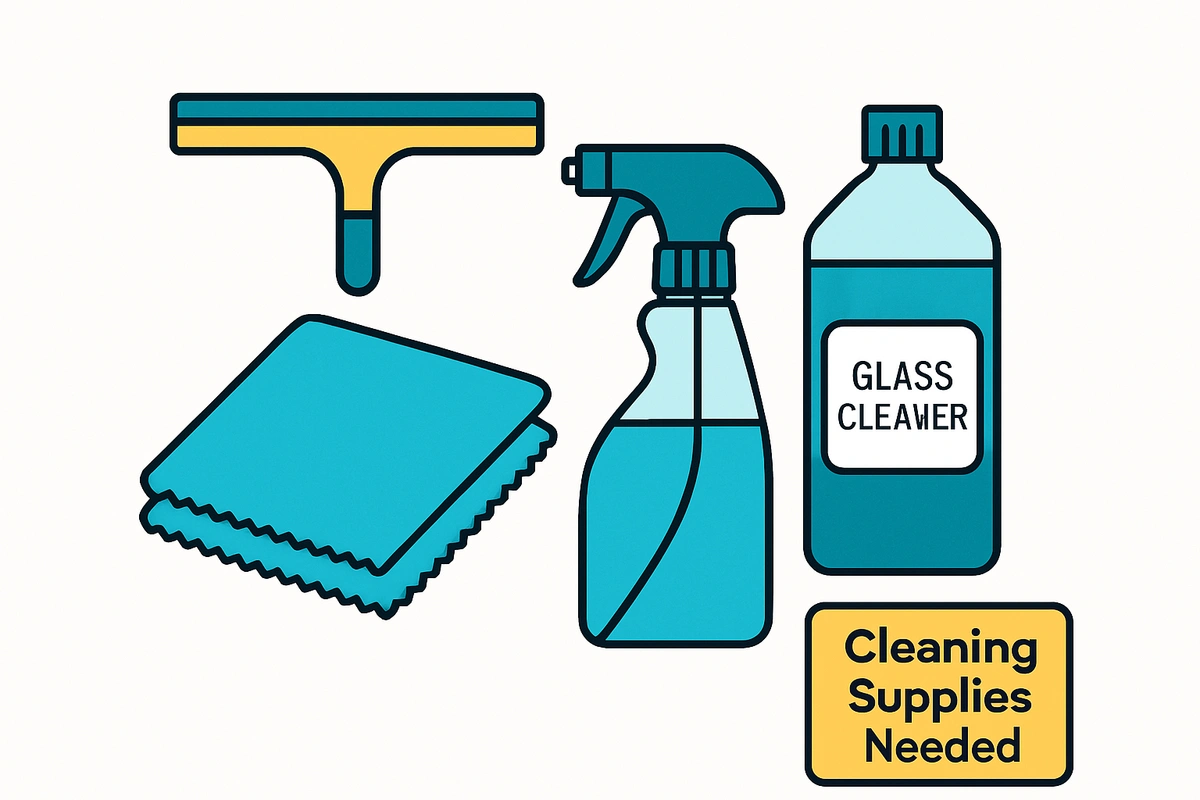
You don't need a detailer's kit.
The basics: a glass cleaner, two microfibre cloths, and a spray bottle.
For the interior specifically, keep this handy:
Your interior glass kit
- Lint-free microfibre cloths (at least two)
- An automotive glass cleaner
- A magic eraser (optional, for stubborn film)
- Clean water
One rule matters. Use clean, lint-free materials, because leftover particles scratch the glass and smear your work.
A cloth that touched wax, polish, or dashboard dressing will spread that residue straight onto your glass. Keep your glass cloths separate.
How to Clean the Inside of Your Windshield: Step by Step
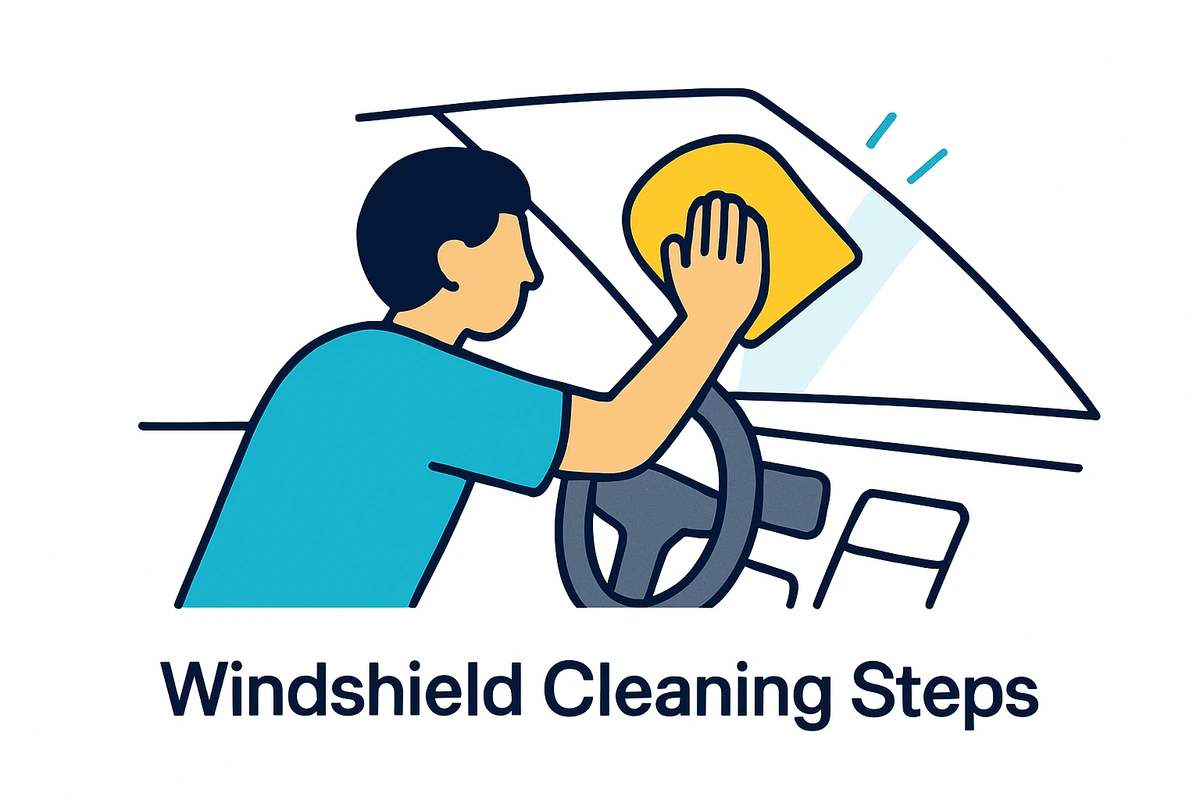
This is the method that stops streaks before they start. It's what careful detailers do, and it works.
-
1
Dry-wipe the glass first
Start with a dry microfibre cloth. Dry cloth first means less residue. Wipe in circles, then go vertical over the same area. This lifts loose dust before liquid turns it into muddy streaks.
The bottom edge is the hardest spot—where the dashboard meets the glass. Sit facing the rear of the car and use the back of your hand to reach that tight corner. That strip is exactly where haze hides. Don't skip it.
-
2
Cut through the grease
Now tackle the oily off-gassing film. A magic eraser works well for degreasing. Dip the eraser in warm water to activate it, then wipe in circles.
The moment you finish, dry the area with a fresh towel. This stops wet streaks and removes any residue the eraser leaves. Prefer a spray? Spritz your cleaner onto a cloth and wipe in circles.
-
3
Finish with glass cleaner
Once the glass is dry and grease-free, do a final pass with cleaner. Spray the cleaner onto a microfibre cloth, not onto the glass. Wipe circles, then finish vertically.
Here's why this matters: spraying straight at the glass sends droplets onto the dashboard where cleaner can cause discoloration. Spraying the cloth keeps the cleaner off your hands too.
The Real Secret to a Streak-Free Finish
People ask how detailers clean without streaks. There's no magic product. It's technique.
Use two cloths: one to apply and clean, a second to buff afterward. Buff while the glass is nearly dry—a final buff with a dry, clean cloth lifts the last film. Don't clean in direct sun; the cleaner flashes off a hot windshield before you can wipe it, and that dries into streaks. Clean in shade or early morning. And change your cloth the moment it feels damp and dirty—a saturated cloth just spreads grease around.
What Should You Actually Clean the Inside With?
This is the most common question.
A proper automotive glass cleaner is the safest, easiest choice. Shop-bought cleaner does the job well and usually smells better than a homemade mix, which matters inside a closed cabin.
If you want homemade, the classic works: a small amount of vinegar and methylated spirits in water. The vinegar cleans, and the alcohol helps the solution evaporate fast, which reduces smears.
But be realistic. Both chemicals smell unpleasant, the ratio is hit-and-miss, and once you factor in cost and prep time, you're no better off than with proper glass cleaner.
For the outside glass, use an alcohol-based cleaner.
Bottom line: dedicated glass cleaner plus microfibre beats almost every hack you'll see online.
Should You Use Windex? A Word on Ammonia and Tint
Plenty of drivers reach for household window spray. Check the label first.
Many general-purpose cleaners are ammonia-based, and ammonia can damage car glass, so avoid them. The risk is bigger if your windows are tinted. If you have tint, use ammonia-free products (Toyota of Orlando). A general glass spray can clean glass, but ammonia-based cleaners on tinted windows do more harm than good. When in doubt, pick a cleaner that says "auto glass" and "ammonia-free."
Getting Rid of Haze, Film, and Cloudiness
If your glass looks cloudy after wiping, you're dealing with that off-gassing film, not surface dust.
Repeat the magic-eraser-and-dry step until the film lifts. A single wipe rarely removes months of buildup. Stubborn haze takes two or three passes.
Why chase every last bit? That hazy film causes glare. Clean glass inside and out is the best way to reduce dazzle from sun and headlights.
At night, a filmy windshield scatters light and makes oncoming headlights bloom. In daytime, low sun becomes a blinding sheet. Clearing it is a safety upgrade, not just cosmetics.
Don't Forget the Outside Glass
A spotless interior means little if the outside is filmed with dust and dead insects.
Do both in one session. The exterior method is straightforward:
- Lift the wiper arms away from the glass. Some cars switch to a "wiper maintenance" mode instead. Check the handbook.
- If the glass is very dirty, wash it first with water and a brush, then dry it.
- Spray one half with an alcohol-based glass cleaner. Avoid ammonia-based products.
- Wipe with a clean microfibre cloth in long, smooth strokes, top to bottom and side to side.
- Repeat on the other half.
- Buff with a second clean cloth.
Working one half at a time keeps cleaner from drying before you wipe it. That matters even more in heat.
In dusty, sunny environments, exterior glass gets a fine grit layer fast. Rinse loose dust off before wiping, or you'll grind it across the glass and create micro-scratches.
Windshield Fog: Why It Happens and How to Clear It Fast
Fog is a different problem from film, but it lives on the same glass.
Windscreen fog happens when temperature differs between the inside and outside of your car, so moisture condenses on the glass.
Put simply: warm humid air meets cooler glass and condenses into tiny droplets.
Which side fogs up tells you what's happening.
Fog on the inside forms when it's colder outside. Moisture from your breath, damp shoes, umbrellas, and wet clothing hits cold glass.
Fog on the outside is most common in hot, humid weather. Moisture-laden outside air meets glass your air-conditioning has chilled.
That second case is what Gulf drivers know. Blast the A/C on a humid morning and the outside glass can mist over instantly.
Clearing fog on the inside
To defog inside glass fast, work through these steps:
- Turn the front defroster on with heat. Warm air evaporates moisture off the glass.
- Turn on the A/C. It sounds odd, but it pulls moisture out of cabin air, even while the heater runs.
- Turn off air recirculation so drier outside air enters and dries the cabin.
- Crack the windows slightly to let humid air escape.
- Be patient—it can take a few minutes to clear fully.
This settles the old "hot or cold air?" debate. You want warm air to raise the glass temperature, plus A/C running to dry the air. They work together.
Your car may help automatically. Many newer cars direct airflow toward the windscreen the moment you activate defrost mode.
Look for the demister button too. It directs maximum airflow at the windscreen and the A/C helps dry the air.
Keep a microfibre cloth in the door pocket. If the glass mists again while you drive, a quick wipe buys you clear vision.
Clearing fog on the outside
Outside fog is easier:
- A quick pass of the wipers often clears it instantly.
- If the A/C made the glass much colder than outside air, raise the cabin temperature slightly.
- Roll the windows down for a moment to balance the temperature difference.
- Avoid maximum cold A/C, which can trigger exterior fogging.
How to Stop Your Windshield Fogging Up
Clearing fog is reactive. Preventing it is better, especially before a rushed morning drive.
The single most useful habit: keep the windshield clean. Dirty glass traps moisture more easily and fogs faster.
Dust, oils, and fingerprints give water droplets something to cling to. That off-gassing film does the same. Cleaning the inside reduces fogging and improves night visibility at the same time.
Cut the moisture you bring into the cabin:
- Shake off umbrellas before you get in.
- Wipe wet shoes.
- Remove wet floor mats.
- Don't leave damp towels or clothing in the car.
Two mechanical checks help. A dirty cabin air filter can cut your defroster's effectiveness and make fogging worse.
And since the A/C removes humidity from cabin air, an A/C system that isn't working properly lets your windows fog more often.
Anti-fog products are an option. Anti-fog sprays and wipes made for automotive glass create a barrier that reduces condensation. Some are safe on tinted windows.
How to Get Tree Sap Off Your Windshield
Park under a shady tree and you may pay for it in sticky spots. Sap hardens fast, and your wipers just smear it around (Glass Doctor).
Standard washer fluid won't fix it. Automotive washer fluid typically won't remove sap.
The good news: a few household items handle it. Try these in order from freshest to hardest sap.
Method 1: Rubbing alcohol
Isopropyl alcohol removes sticky substances like sap.
Here's the safe way:
- Wear protective gloves—rubbing alcohol absorbs through the skin.
- Apply alcohol to a microfibre or soft cloth, not rough towels or sponges that scratch.
- Lay the moist cloth over the sap for a few moments to soften it.
- Rub gently in circles, re-moistening as needed.
- Finish with auto glass cleaner and a microfibre cloth.
On paint, the same method works. Let the alcohol sit on the sap for at least 30 seconds before rubbing (AutoZone).
Method 2: Ice for soft, fresh clumps
For large globs that haven't fully hardened, cold helps:
- Chill a few large ice cubes in water briefly.
- Hold a cube on the sap for a few minutes so it solidifies.
- Lift it off with a plastic scraper or plastic putty knife.
One firm rule: don't use razor blades or metal tools, which damage the glass.
Method 3: White vinegar
Distilled white vinegar is another safe household option:
- Spray it generously on the sap and let it sit three to five minutes.
- Rub in circles with a microfibre cloth, adding more as needed.
- Wash with hot, soapy water, rinse, and dry.
Method 4: Bug and tar remover
For sap that's been on the paint a while, a dedicated product is worth it. A bug and tar remover, or tree-sap remover, is designed for exactly this.
Use it simply:
- Spray it directly onto the sap-covered area.
- Let it sit a few minutes, following the product's instructions.
- Wipe the sap away gently with a microfibre cloth. Don't scrub hard.
- Rinse with water, then apply car wax to protect the paint.
On paint, finish any sap removal with a wax layer. It restores shine and re-protects the surface.
What about Dawn and WD-40?
Both work in different situations. For fresh sap, mix Dawn dish soap with warm water and gently scrub.
For hardened, dried sap, WD-40 is better. Spray it on, let it sit a few minutes, wipe it away, then clean with soapy water to remove residue.
Warm, soapy water alone can work too. It's the slowest method and takes patience.
Sap and your glass
On the windshield itself, sap usually isn't a disaster. It doesn't normally damage the glass, but it reduces visibility and gets harder to clean the longer it sits.
On paint it's a different story. Sap is usually acidic, and prolonged contact can erode the clear coat and leave stains. Remove it as soon as you spot it.
To keep sap from sticking in the first place, try these:
- Avoid parking under trees known for sticky sap, like pine or maple. Or park further from the trunk.
- Keep a wax coat on the car. It creates a barrier that makes sap easier to remove before it damages paint.
- Use a breathable car cover when you can. It guards against sap, bird droppings, and UV.
- Keep a small kit in the car: a microfibre cloth and a little sap remover or rubbing alcohol. Deal with fresh spots on the spot.
Address sap as soon as you notice it. That's the single best way to avoid long-term damage.
Frost, Ice, and Defrosting the Glass
Frost is rare in the Gulf, but worth covering for cold snaps and winter driving abroad.
Clear the whole windscreen before you move. Not just a small patch to peer through.
Work through it safely:
- Make sure the wipers are off before you start the engine. They might be frozen to the glass.
- Start the engine and turn on the warm air blower. Run the A/C too to pull moisture from the cabin.
- Switch on the rear-windscreen heater and heated mirrors if you have them.
- Use a scraper and de-icer while the car warms up.
Keep the Wipers and Washer System Working
Clean glass and clean wipers go together. Your wipers keep the glass clear once you're moving.
Clean them regularly. Wipe the rubber blades with screen-wash to remove dirt and grime. It helps them work better and can extend their life.
Grit trapped on a blade drags across the glass and leaves fine scratches. This small step protects the windshield too.
Keep the washer bottle topped up with good-quality screen-wash. It helps clean the glass year-round.
If the blades judder, make noise, or leave streaks and unwiped bands, replace them. Fresh blades clear the screen more effectively and reduce dazzle from the sun.
Cleaning Windshields in Kuwait's Heat and Dust
Local conditions change how often and how you clean.
Clean in shade or early morning. On a windshield baked by sun, cleaner evaporates before you can buff it, and that guarantees streaks.
Expect the interior film to come back faster. Intense heat accelerates off-gassing, so a monthly interior wipe is sensible here rather than twice a year.
Deal with dust before you wipe it. A thick dust layer acts like sandpaper if you drag a dry cloth over it. Rinse or lightly dampen heavy dust first, like washing a very dirty screen before wiping.
Watch for water spots. If you rinse with tap water and let it dry in sun, hard-water minerals can dry into spots. Dry the glass with a microfibre cloth instead of letting it air-dry.
None of this is exotic. It's the same technique applied a little more often.
When to Stop Cleaning and Check for Damage
Sometimes the glass looks dirty but isn't. It's damaged.
After removing sap or a heavy clean, inspect the front and rear windshields for cracks, chips, or sealing issues. Tiny chips grow into large, dangerous problems fast.
High-mileage cars often have thousands of tiny pits in the glass that you notice mostly at night. Oncoming light refracts through them and mimics a dirty windscreen. The only fix is replacing the screen.
Small chips and cracks can often be repaired with clear resin, but ignored, they spread. Once damage grows, you need a whole new windscreen.
If scrubbing never clears a smudge, look closer. It may be a chip that needs a professional, not more cleaner.
Frequently asked questions
What is the best thing to clean the inside of a windshield with?
A dedicated automotive glass cleaner with a lint-free microfibre cloth. It's easier and usually more pleasant than a homemade mix.
Does a magic eraser work on the inside of a windshield?
Yes. Activate it in warm water and it degreases the glass well. Dry the area immediately after to avoid streaks.
Why is my inside windshield so cloudy?
Off-gassing. Chemicals from plastics, vinyls, and leather in your cabin settle on the glass as a greasy film.
How do I defog my windshield fast?
Run the defroster with heat and the A/C together, turn off recirculation, and crack the windows.
What removes tree sap from a windshield?
Rubbing alcohol, white vinegar, or ice for soft clumps. Washer fluid won't do it.
Should I use vinegar to clean my windshield?
You can. Vinegar with a little methylated spirits in water cleans and dries fast. A shop-bought cleaner is often simpler though.
Clear Glass, Every Drive
The bottom line
A clean windshield is one of the cheapest safety upgrades you can give yourself. It cuts glare, sharpens night vision, and stops the fog that steals a few dangerous seconds on a rushed morning.
The method is simple. Dry-wipe, degrease, finish with glass cleaner on the cloth, then buff. Do the outside, the wipers, and the washer bottle in the same session. Stay ahead of sap and film before they set.
In Kuwait's heat and dust, that film comes back faster than most drivers expect. If you'd rather skip the effort in the sun, the mobile car wash team at Posefore Wash & Polish can bring a full interior and exterior glass clean to your door. You get back on the road with genuinely clear glass.